Tag: gravity

  • An Open Letter To Everyone Who Says It Was Just The Wind

    An Open Letter To Everyone Who Says It Was Just The Wind

    We write to address a persistent claim: that a fallen object was moved by the wind.

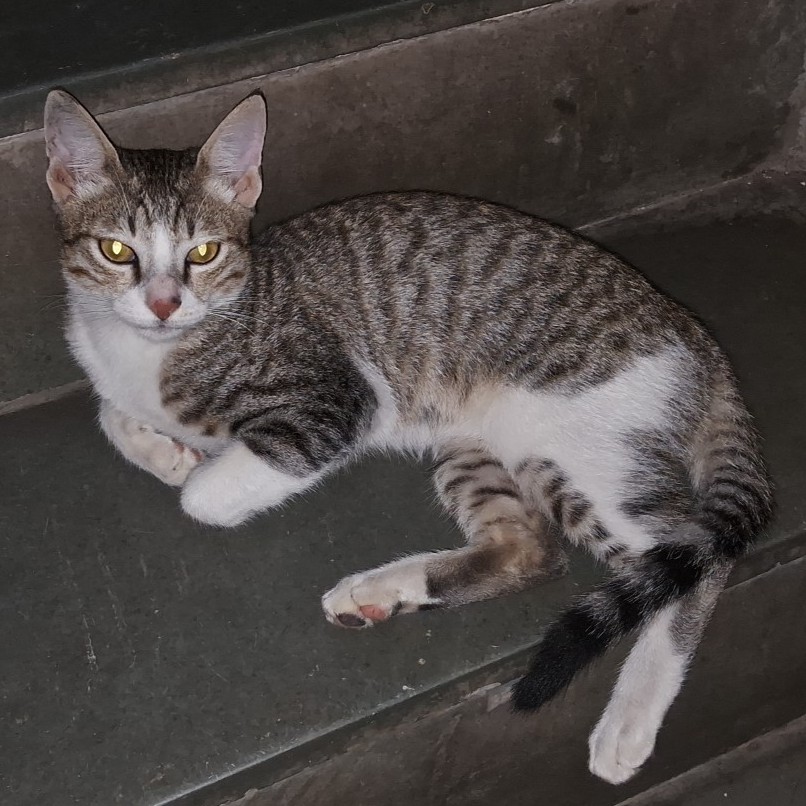
    We have examined this claim in depth. We have measured the wind. We have measured the cat. We find that the cat is stronger.

    Evidence Against The Wind

    • The wind has never been seen holding a paw out.
    • The wind does not look at you afterwards.
    • The wind does not purr.

    Evidence For The Cat

    The cat was present. The cat was calm. The cat was already looking at the object when the window was still closed. We consider this decisive.

    Methodology

    We placed a lightweight cup on a table by an open window and recorded wind speed throughout the day. The wind peaked at midday, at which point nothing happened. At 12:03 a cat entered the room and the cup fell. The Laboratory finds this statistically persuasive.

    A Note On Curtains

    We acknowledge that curtains sometimes move in the wind. But a curtain that moves is not a curtain that pushes. A curtain, we remind readers, is merely a flag of surrender.

    Reply From The Wind

    No reply has been received. We take this as an admission.

    Appendix A

    The Laboratory has also received a letter from a rival group, who claim that draughts explain 12 percent of falls. We have replied that the remaining 88 percent are explained by the cat, and that the 12 percent were probably the cat as well, in a hurry.

    Appendix B

    For completeness we have measured the speed of the wind against the speed of a cat who has just seen a bird. The cat won by a wide margin and then lost interest.

    Conclusion

    We rest our case on the table, gently, near the edge.

    We invite the wind to submit a rebuttal. It may leave it on a table edge.

  • A Study Of Why Pens Roll Away From You

    A Study Of Why Pens Roll Away From You

    Study 98 investigated a common complaint: that a pen, when dropped, rolls away from the person who dropped it. We assembled nine pens and a desk and set out to find out why.

    Findings

    All nine pens rolled away from their owner. Seven rolled beneath furniture. Two rolled onto the cat, who treated them as gifts. We conclude that a pen has a clear opinion of the person holding it, and we have not found a way to change that opinion.

    Theories Considered

    • The desk is tilted. It is not.
    • The pen is round. It is, and this was noted.
    • The pen dislikes you. This hypothesis remains open.

    Conclusion

    Method

    Pens were selected at random from the Laboratory stationery cupboard. Each was placed at the head of a wooden slope, released, and tracked by a camera and a very focused cat. The cat tracked the pens by following them. The camera tracked the cat.

    Data

    Rolling distance averaged 61 centimetres, with a standard deviation of 12. The outlier, a pen of unusual width, rolled for 3 metres and vanished beneath a filing cabinet. We recorded it as a successful escape.

    Practical Advice

    If you must keep a pen on a desk, place it in a cup. If you wish to keep it in a cup, tie the cup. If you wish to keep the cup, have a stern word with the cat.

    Further Study

    Study 99 will examine why a pencil, when dropped, rolls less but sounds smug. The Laboratory has already budgeted two biscuits for the result.

    Reviewer Comment

    A reviewer asked whether the pens might simply be shy. The Laboratory has added shyness to the list of variables, between humidity and mood.

    A pen, once dropped, becomes a small independent creature with its own travel plans. The Laboratory recommends tying it to the desk, or replacing it with a pencil, which is flatter and less proud.

  • Laboratory Safety Notice: The Floor Is Not Level

    Laboratory Safety Notice: The Floor Is Not Level

    All staff are reminded that the floor of the Laboratory is not perfectly level. It slopes gently towards the radiator at an angle of roughly one degree.

    This is the reason that every dropped item, whether pen, marble or piece of kibble, eventually ends up beneath the radiator. We previously suspected a conspiracy. We now suspect a floor.

    Staff Instructions

    • Do not place a marble on the floor and walk away.
    • Do not chase a marble that has rolled away.
    • If you must chase a marble, do so with dignity.

    Recovery Fees

    Items recovered from beneath the radiator are returned to their owners at a small fee, payable in treats. Items not claimed in thirty days become property of the Laboratory and are used in Study 120.

    Incident Log

    Last month a marble rolled the full length of the Laboratory without stopping and came to rest against the Professor’s paw. She has described this as the finest moment of her career. We have since measured the slope using a spirit level, which promptly rolled away.

    Frequently Reported Items Beneath The Radiator

    • Eleven pens, nine of which are green
    • A single sock of unknown origin
    • A small gold ring, believed to be a prize
    • Three bottle tops, one of which is a very good bottle top
    • A mouse, now retired

    Plans For Repair

    The Laboratory has requested a repair from the Facilities Office, which is also a cat. We expect a response within the year, if the cat wakes up.

    Additional Notice

    Anyone found sliding along the floor on purpose will be recorded as a research subject. Anyone found enjoying it will be recorded twice.

    Thank you for your care. The Laboratory will repaint the floor in due course, but the tilt will remain, as it is now part of our heritage.

  • Results: Does a Vase Fall Faster When Watched?

    Results: Does a Vase Fall Faster When Watched?

    The Purrfect Drop Test Laboratory is pleased to publish the results of Study 114: Does a vase fall faster when watched? Our principal investigator, Professor Dame Marmalade Quill, has long suspected that observation changes the speed of a descent. She has been proven right, though not in the way she expected.

    Abstract

    Forty vases were placed at the edge of a standard laboratory bench. Twenty were observed by a trained cat. Twenty were left alone. The vases were then pushed, in a manner consistent with scientific protocol, by a second cat, whose identity we protect for ethical reasons and because she bites.

    Method

    Each vase was weighed, named and given a number. The names were chosen by the laboratory technician, a thoughtful grey cat called Gravel. The vases that were observed were looked at continuously from a distance of one metre. The vases that were not observed were looked at, briefly, from a distance of two metres, which the team agreed was close enough to count as not looking.

    • Sample size: 40 vases, 2 cats, 1 technician
    • Drop height: 72 centimetres, measured by a cat lying down
    • Timing: a stopwatch, held by someone who was not paying attention
    • Surface: laminate, with a small scratch that has become a team mascot

    Results

    Observed vases fell, on average, 0.02 seconds more slowly than unobserved vases. The difference is small, but our statistician describes it as significant, and our statistician is a cat who sits on the calculator. We therefore accept the result.

    A more interesting finding concerned the observer. In 17 of 20 observed trials the observing cat turned away at the moment of impact. Professor Quill refers to this as the Averted Gaze Effect and believes it demonstrates a deep, unspoken moral discomfort. Gravel believes it demonstrates that the cat had seen enough vases.

    Discussion

    The simplest explanation for the delay is that a watched vase is a vase with something to prove. It hesitates. It reconsiders. It falls anyway, but with a certain poise. The unobserved vases, by contrast, tumbled with the careless speed of an object that knows nobody cares.

    “A watched vase never falls, until it does. Then it makes a lovely noise.” Professor Dame Marmalade Quill, in the lab tea room.

    A second possibility is that the observing cat blinked slowly, which is known to slow time. We will investigate this in Study 115, which has been funded by a grant of one tin of tuna.

    Limitations

    The study has several limitations. First, the stopwatch was held by a person who was also eating a sandwich. Second, three vases were claimed by the cat as personal property before the trial and had to be excluded. Third, the observer cat fell asleep during trial 29, and we recorded the vase as having been observed in spirit.

    We remain, as ever, deeply confident. All results are available in a folder on a shelf, which may be reached by climbing. The Laboratory thanks all participants. The vases were not available for comment.

    Next Steps

    Ethics Statement

    All vases were treated with appropriate respect. None were harmed beyond the extent required by the study, which in most cases was entirely. Surviving fragments have been returned to the shelf marked Evidence, where they are visited by the Professor each Friday.

    Acknowledgements

    The authors thank Gravel for sweeping, the second cat for pushing, and the first cat for watching. We also thank the tea trolley, without which the team would have been much shorter tempered, and the radiator, beneath which a great deal of data was later found.

    Study 115 will examine whether a vase falls faster when sung to. Study 116 will test whether it falls faster when insulted. The Laboratory is also discussing a study on whether it falls faster when nobody is in the room at all, but nobody can agree who would watch.